

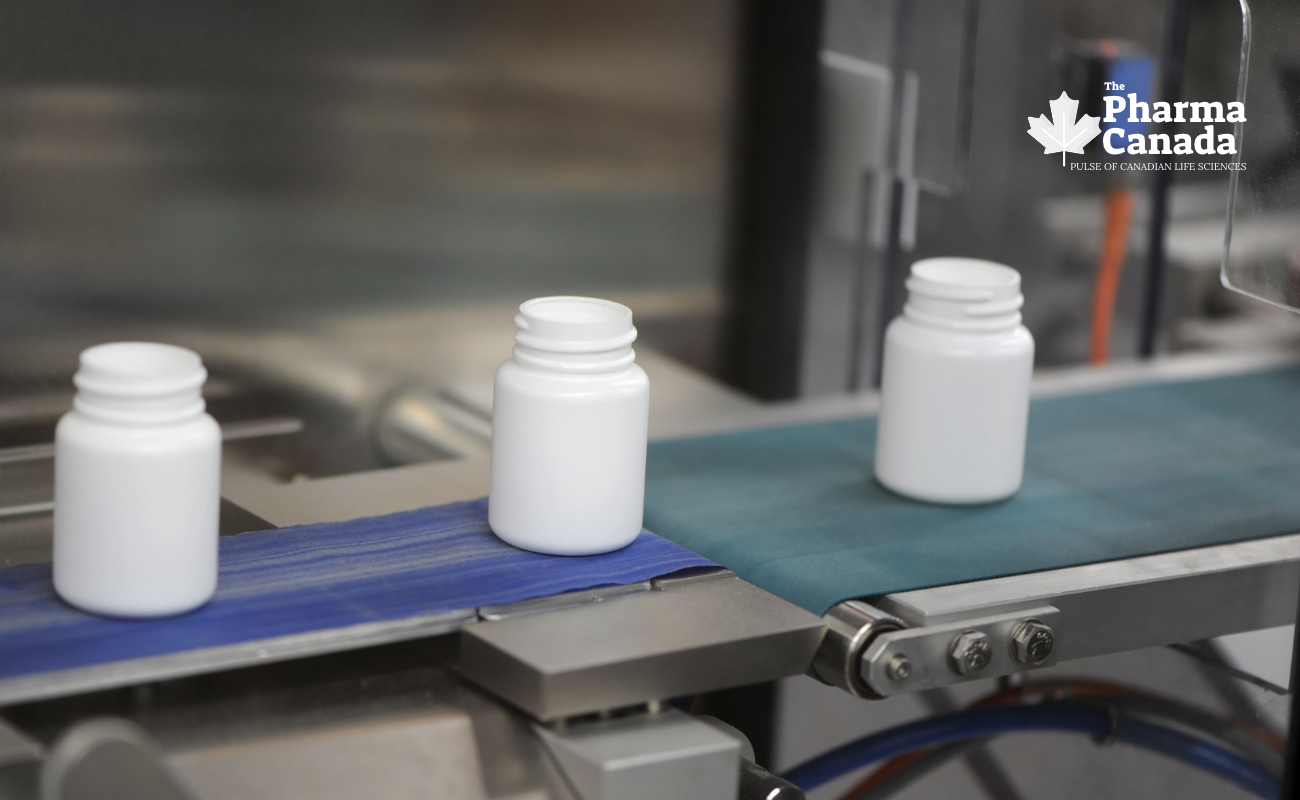
As demand for medicines grows and supply chains face mounting pressure, Contract Development and Manufacturing Organizations (CDMOs) could play a pivotal role in helping Canada build a more resilient, agile, and reliable pharmaceutical supply ecosystem.
A medicine can represent years of scientific research, substantial investment, and a major advancement in patient care. But its value ultimately depends on whether it can be manufactured consistently, delivered on time, and made available to the patients who need it.
For Canada, ensuring a reliable supply of medicines is becoming an increasingly important healthcare priority. Manufacturing disruptions, dependence on international suppliers, changing demand patterns, and the complexity of pharmaceutical production can all affect the availability of essential treatments.
Against this backdrop, Contract Development and Manufacturing Organizations (CDMOs) are emerging as important partners for pharmaceutical companies seeking manufacturing capacity, technical expertise, and greater supply chain flexibility.
By offering specialized development, production, testing, and packaging capabilities, CDMOs can help companies respond to changing market needs without requiring every manufacturer to build and maintain all these capabilities internally.
However, their contribution extends beyond producing more medicines. The broader opportunity lies in building a pharmaceutical supply chain that can anticipate disruptions, adapt to demand, and maintain consistent quality.
For Canada, the question is how effectively CDMOs can support this transition while strengthening domestic manufacturing capabilities and preserving access to medicines.
Canada’s Drug Supply Challenge: Beyond Demand and Production
Canada’s pharmaceutical supply chain operates within a global manufacturing network. Active pharmaceutical ingredients (APIs), excipients, intermediates, packaging materials, and finished medicines may originate from different countries before reaching Canadian distributors, pharmacies, hospitals, and patients.
This interconnected model provides access to international manufacturing expertise and established production networks. However, it also creates vulnerabilities when a critical supplier experiences a disruption.
Health Canada’s plan to address health product shortages for 2024–2028 identifies manufacturing and distribution problems, transportation challenges, geopolitical developments, and supplier concentration among the factors that can undermine supply reliability. The country’s relatively small share of global pharmaceutical sales and reliance on imported products add to these challenges.
The scale of the issue is reflected in Health Canada’s fiscal year 2024–2025 review, which recorded 2,588 new drug shortage reports. Manufacturing disruptions accounted for 65% of the reported shortage causes, followed by increased demand at 15% and shipping delays at 9%.
These figures highlight an important distinction: pharmaceutical supply challenges are not exclusively about insufficient production capacity. They can also arise from quality failures, limited access to raw materials, constrained manufacturing schedules, and logistical bottlenecks.
As pharmaceutical portfolios expand and demand fluctuates, manufacturers need greater flexibility to respond without compromising product quality or regulatory compliance.
This is where CDMOs can become valuable partners.
The Expanding Role of CDMOs in Pharmaceutical Manufacturing
Traditionally, pharmaceutical companies have relied on in-house facilities or external manufacturing partners to produce medicines at commercial scale. CDMOs combine development expertise with manufacturing services, allowing pharmaceutical companies to outsource selected stages of the product lifecycle.
Their capabilities can span formulation development, analytical testing, process optimization, technology transfer, clinical trial material production, commercial manufacturing, and packaging.
For companies entering new therapeutic areas or expanding into Canada, this model can provide access to established infrastructure and technical expertise without the capital expenditure and time required to build a new facility.
CDMOs can also help pharmaceutical companies manage production variability. A company experiencing a temporary increase in demand may be able to use an external partner’s available capacity rather than invest immediately in permanent infrastructure.
For emerging biotechnology companies, outsourcing can be particularly valuable. These organizations often need specialized manufacturing capabilities but may lack the financial resources or commercial scale to establish their own production facilities.
As medicines become more complex, CDMOs are also expanding their role in biologics, sterile injectables, advanced therapies, and other specialized manufacturing processes. These products may require sophisticated equipment, controlled production environments, specialized expertise, and stringent quality systems.
For Canada’s pharmaceutical industry, access to such capabilities can support innovation while helping companies translate development programs into reliable commercial supply.
From Outsourcing to Supply Chain Resilience
The strategic value of CDMOs extends beyond reducing manufacturing costs. When selected and managed effectively, they can help pharmaceutical companies diversify production, improve operational flexibility, and reduce dependence on a single manufacturing site.
Consider a company that sources an essential medicine from one facility. An unexpected equipment failure, quality investigation, or raw-material shortage could interrupt production and delay deliveries.
Working with qualified alternative manufacturing partners may provide additional capacity or a route to recovery. However, this is not an immediate solution: transferring production requires technical validation, regulatory assessment where applicable, quality oversight, and sufficient available capacity.
A resilient outsourcing strategy therefore requires more than signing a manufacturing agreement.
Pharmaceutical companies must assess supplier concentration, evaluate the availability of critical materials, understand production lead times, and establish clear procedures for managing disruptions.
CDMOs can contribute by maintaining robust quality systems, communicating potential capacity constraints early, developing contingency plans, and improving visibility across production schedules.
Digital manufacturing tools and integrated planning systems can further support coordination between pharmaceutical companies, suppliers, and logistics partners.
The objective is to move from reactive shortage management towards a more proactive model in which risks are identified before they affect the supply of medicines.
Quality and Compliance: The Foundation of Reliable Supply
Increasing production capacity is only part of the equation. Pharmaceutical manufacturing must consistently meet applicable quality, safety, and regulatory requirements.
In Canada, drug establishments and manufacturing activities are subject to relevant requirements under the Food and Drugs Act and Food and Drug Regulations, including applicable Good Manufacturing Practices (GMP). Health Canada oversees compliance through regulatory processes that can include inspections and other oversight activities.
For pharmaceutical companies working with CDMOs, outsourcing production does not eliminate the need for appropriate oversight of product quality and regulatory responsibilities.
Manufacturers must evaluate prospective partners on their technical capabilities, quality management systems, inspection history, deviation management, data integrity, and ability to maintain consistent production standards.
Technology transfer is another critical consideration. Moving a process between facilities requires the receiving site to demonstrate that it can reproduce the required product quality and process performance. Inadequate transfer planning can lead to delays, rejected batches, and interruptions in supply.
Quality should therefore be integrated into CDMO selection from the outset rather than treated as a final checkpoint before commercial production.
A dependable manufacturing partner is not simply one that can produce at scale. It is one that can maintain quality, manage change, and deliver consistently under demanding operational conditions.
Domestic Capacity and the Case for Strategic Partnerships
For Canada, strengthening domestic pharmaceutical manufacturing capacity is an important consideration in discussions about supply security.
A stronger local manufacturing base could improve responsiveness for selected medicines, support specialized production capabilities, create skilled employment opportunities, and reduce certain dependencies on international supply routes.
In March 2026, the Canadian government announced a Pharmaceutical and Life Sciences Sector Task Force to explore ways to strengthen the country’s competitiveness, domestic manufacturing capacity, and reliable access to medicines.
CDMOs could contribute to these objectives by providing shared infrastructure and specialized services to companies that might otherwise struggle to establish their own facilities.
However, domestic production alone cannot eliminate every supply risk. Canadian manufacturers may continue to rely on imported APIs, specialized equipment, and other critical inputs. Local manufacturing facilities can also experience technical failures, capacity constraints, and quality-related interruptions.
The strongest strategy is therefore unlikely to depend exclusively on domestic production or international sourcing.
Instead, Canada can benefit from a balanced approach that combines strategically important domestic capabilities with diversified global manufacturing partnerships. CDMOs can support this model by helping companies identify appropriate production locations, develop alternative sourcing arrangements, and establish flexible manufacturing networks.
The priorities should be determined by the clinical importance of the medicine, the vulnerability of its supply chain, the availability of alternatives, and the feasibility of maintaining reliable production.
The Road Ahead: Three Priorities for Canada’s CDMO Ecosystem
To maximize the contribution of CDMOs to Canada’s pharmaceutical supply chain, stakeholders should focus on three priorities.
First, invest in flexible and strategically important manufacturing capacity.
Pharmaceutical companies and manufacturing partners should evaluate where additional capacity would deliver the greatest supply security benefits. This includes assessing essential medicines, specialized dosage forms, sterile products, and other categories where production disruptions could have significant consequences.
Second, strengthen supply chain visibility and risk management.
Companies should improve coordination across manufacturers, raw-material suppliers, logistics providers, and distributors. Better demand forecasting, early-warning systems, contingency planning, and clear communication protocols can help stakeholders respond more effectively to emerging risks.
Third, build long-term partnerships grounded in quality and accountability.
CDMO relationships should extend beyond individual production orders. Clear performance expectations, transparent communication, technology-transfer planning, and shared quality objectives can help manufacturers build dependable external production networks.
Policymakers also have a role in supporting a competitive manufacturing environment through predictable regulatory processes, targeted investment, and collaboration across the pharmaceutical ecosystem.
These measures will not prevent every shortage, but they can improve the system’s ability to anticipate disruptions and maintain access to critical medicines.
Building a More Resilient Pharmaceutical Future
CDMOs are becoming more than external production providers. They can serve as strategic partners in pharmaceutical development, manufacturing flexibility, and supply chain risk management.
For Canada, their contribution could be particularly meaningful as the country seeks to strengthen domestic capabilities while maintaining access to a global network of pharmaceutical expertise and production.
Realizing this potential will require careful partner selection, robust quality oversight, diversified sourcing, and sustained collaboration between industry and government.
Ultimately, pharmaceutical supply resilience cannot be measured by manufacturing capacity alone. It depends on the ability to produce the right medicines, maintain consistent quality, respond to disruptions, and deliver reliable supply when patients need treatment.
The next chapter of Canada’s pharmaceutical supply chain will depend not only on how medicines are developed, but on how effectively the industry builds the manufacturing partnerships needed to deliver them.