
Introduction
In 2019, Canadians purchased approximately C$126 million worth of Ozempic through retail pharmacies. By 2025, that figure had surged to C$2.9 billion, representing more than a 20-fold increase in just six years. The once-weekly injection has become a defining force in the Canadian pharmaceutical market, selling at more than three times the pace of the country’s next-best-selling medicine.
Yet Ozempic is only the most visible example of a broader transformation. Canada is the world’s ninth-largest pharmaceutical market, with C$51.25 billion in total sales and compound annual growth of 9.0% since 2020. Beneath this expansion lies a striking concentration of value: brand-name medicines account for 80.4% of sales by value but just 20.6% of prescriptions. A relatively small group of high-priced therapies therefore commands a disproportionate share of market revenue.
The 2025 rankings reveal three defining shifts in the Canadian pharmaceutical landscape:
- The GLP-1 surge: Medicines for diabetes and obesity have moved from a fast-growing category to a central driver of pharmaceutical sales. Meanwhile, Canada’s authorization of generic semaglutide marks a significant turning point for the class.
- The biosimilar squeeze: Three top-10 medicines, Stelara, Eylea, and Remicade, recorded declining sales as lower-cost alternatives intensified competitive pressure. Their continued presence among the market’s leading products illustrates both the enduring value of established biologics and the challenges they face.
- The rise of immunology and oncology: Skyrizi and Dupixent are delivering strong growth, while Keytruda and Darzalex are advancing new treatment-delivery options that can shift cancer care from lengthy intravenous infusions to shorter subcutaneous administrations.
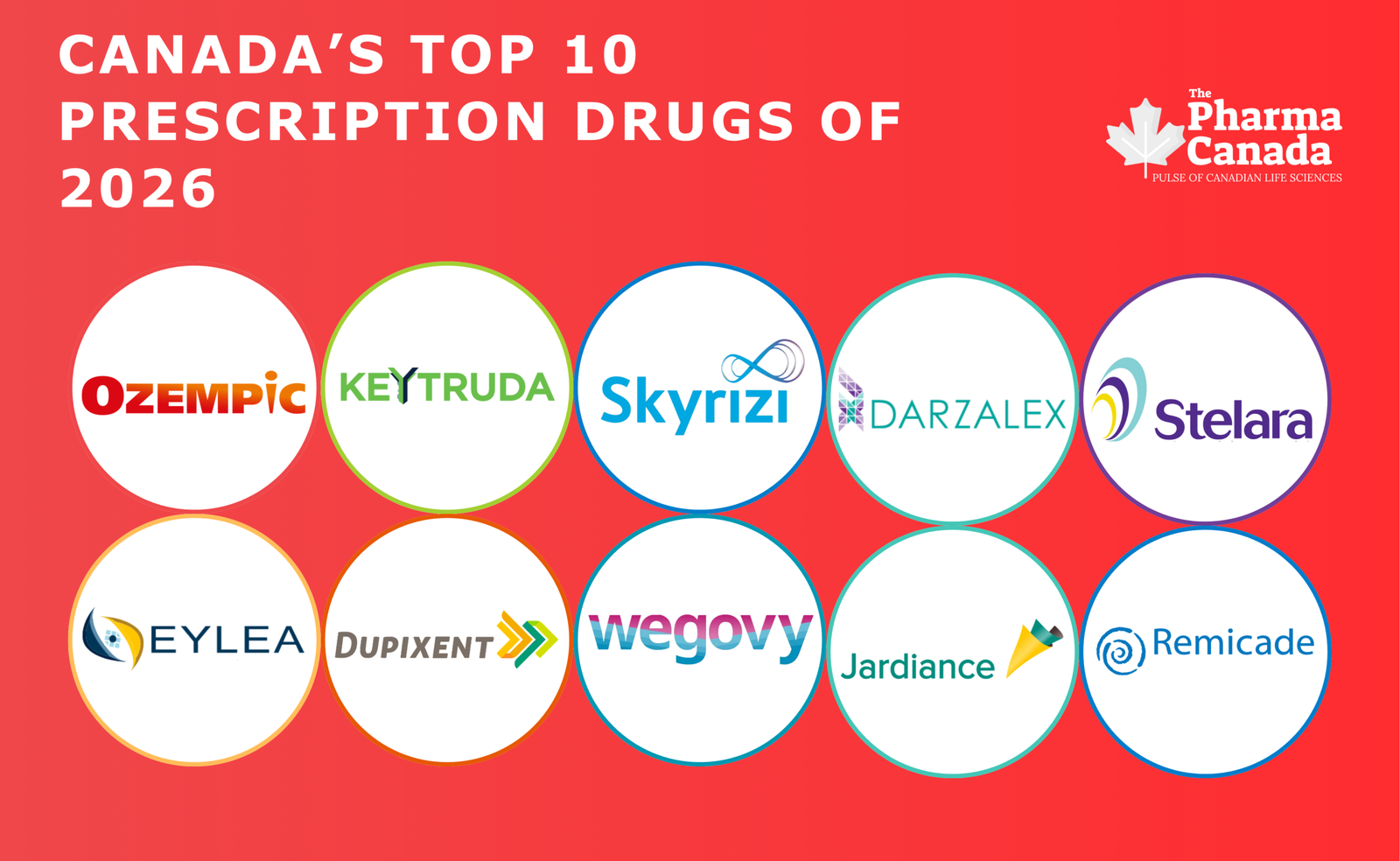
This report profiles Canada’s Top 10 Prescription Drugs of 2026, ranked by Canadian sales revenue of 2025. Each profile examines the medicine’s therapeutic role, sales performance, innovation and differentiation, recent regulatory and market developments, and outlook over the next 12–24 months.
The ranking draws primarily on IQVIA PharmaFocus data published by the Government of Canada, supplemented by IQVIA retail pharmacy data. The methodology section outlines the ranking criteria, data sources, and limitations.
Executive Summary
A market at a turning point
Canada’s best-selling medicines reflect two competing forces: continued growth in metabolic and immunology therapies, and mounting pricing pressure on established biologics and the semaglutide franchise as generic and biosimilar competition expands.
The result is a market in which clinical differentiation, patient access, reimbursement, and pricing strategy are becoming increasingly interconnected.
Key Findings
1. Ozempic stands in a category of its own
Ozempic ranks first, generating C$2,527 million in sales in the ISED/IQVIA table, an increase of 15% year over year. Its sales exceed those of the next two products, Keytruda and Skyrizi, combined, based on the report’s calculations.
2. The top 10 represent a substantial share of market value
The 10 leading medicines generated approximately C$9.2 billion in combined sales, equivalent to roughly 18% of Canada’s C$51.25 billion pharmaceutical market. This estimate combines two IQVIA measures and should therefore be interpreted as approximate.
3. Metabolic medicines lead the revenue mix
Ozempic, Wegovy, and Jardiance collectively account for approximately 41% of top-10 sales, ahead of immunology at around 31%, oncology at 20%, and ophthalmology at 8%, based on the report’s calculations.
4. Skyrizi, Dupixent, and Wegovy are among the strongest growth performers
Skyrizi recorded 43.3% growth, while Dupixent increased by 37%. Wegovy delivered the most dramatic expansion, rising approximately 249% from C$182 million in 2024 to C$635.5 million in 2025.
5. Generic and biosimilar competition is reshaping established franchises
Eylea sales declined by 27.5%, Stelara by 19.4%, and Remicade by 8.4%. With generic semaglutide entering the market, five of the 10 leading medicines face generic or biosimilar competition, representing approximately 56% of top-10 revenue, according to the report’s calculations.
6. Biologics remain central to pharmaceutical spending
Seven of the 10 leading products are biologics, reflecting the growing importance of complex therapies in Canada’s pharmaceutical market. The Government of Canada’s sector profile similarly identifies biologics among the dominant products, with 12 of the country’s top 20 medicines falling into this category.
7. Drug-delivery innovation is emerging as a competitive differentiator
Convenience and treatment administration are becoming important dimensions of pharmaceutical innovation. Health Canada approved Keytruda SC in February 2026, while subcutaneous Darzalex can reduce administration time from hours to minutes.
The GLP-1 Market in Focus
The GLP-1 market has become one of the most consequential growth engines in Canadian pharmaceuticals. Sales across the class approached C$4 billion in 2025, up from C$2.7 billion in 2024 and C$2.1 billion in 2023.
Mounjaro, which sits just outside the top 10, illustrates the competitive momentum. Its Canadian sales climbed from C$59 million in 2024 to C$403.6 million in 2025. Lilly subsequently reduced Canadian list prices by 20% or more, adding another dimension to competition in the metabolic medicine market.
Canada has also become the first G7 country to authorize generic semaglutide. Apotex launched its version on May 14, 2026, opening a new chapter for a medicine class that has experienced extraordinary commercial growth.
What to Watch in 2026–2027
1. Semaglutide price erosion
Generic pricing is expected to put pressure on established semaglutide brands. Under the pricing framework cited in this report, generic prices begin at 75% of the brand price and decline to 35% once three or more competitors enter the market. The critical question is whether continued volume growth can offset lower prices.
2. Mounjaro’s challenge to the market leaders
With semaglutide prices under pressure and no generic tirzepatide immediately on the horizon, Mounjaro could be well positioned to climb the rankings. Its future trajectory will depend on continued demand, pricing, reimbursement, and competitive dynamics.
3. Further biosimilar launches
Stelara faces additional biosimilar entrants, including Pyzchiva and Imuldosa. Meanwhile, Opuviz, an Eylea biosimilar, has a Canadian commercialization agreement but had not yet launched at the time reflected in the cited information.
4. Regulatory approvals and reimbursement expansion
New indications could create additional growth opportunities for established therapies. Skyrizi received a positive recommendation from Canada’s Drug Agency for ulcerative colitis in November 2025. Dupixent’s October 2025 approval for chronic obstructive pulmonary disease (COPD) also expanded its therapeutic reach, including for patients with an eosinophilic phenotype.

1. Ozempic (semaglutide) | Novo Nordisk
2025 Canadian Sales: C$2,527 million | Year-over-Year Growth: +15.0%
Primary Strength: Market dominance and prescription volume
Drug Overview
Ozempic is Novo Nordisk’s once-weekly semaglutide injection, authorized by Health Canada primarily for the treatment of type 2 diabetes. It is also sometimes prescribed off-label for weight management. With sales more than three times those of the next-best-selling medicine, Ozempic stands at the centre of Canada’s pharmaceutical market.
Canadian Sales Performance
The ISED/IQVIA PharmaFocus table reports C$2,527 million in sales in 2025, representing 15.0% year-over-year growth. A separate IQVIA retail pharmacy measure puts sales at approximately C$2.9 billion in 2025, compared with C$126 million in 2019. This represents more than a 20-fold increase in six years.
Although the two figures reflect different data measures, both underscore the extraordinary commercial expansion of the semaglutide franchise.
Key Innovation Areas
Ozempic anchors Novo Nordisk’s broader semaglutide portfolio. Its sister product, Wegovy, uses a higher-dose semaglutide formulation for weight management, allowing the company to serve distinct therapeutic markets through the same active ingredient.
The franchise’s commercial strength reflects the growing role of GLP-1 medicines in metabolic health and the substantial demand for treatments addressing type 2 diabetes and obesity.
Recent Developments
Market exclusivity ended in early January 2026, opening the door to generic competition. Health Canada approved generic versions from Dr. Reddy’s on April 28 and Apotex on May 1, 2026. Apotex subsequently launched Apo-Semaglutide on May 14.
Despite these launches, Ozempic retained a substantial lead in the first half of 2026, generating approximately C$1.49 billion in retail sales. By comparison, Apotex’s generic recorded approximately C$15 million, while Dr. Reddy’s version generated around C$1 million.
Novo Nordisk has stated that more than one million Canadians use Ozempic or Wegovy. The company has also offered savings support to certain uninsured patients who prefer not to switch treatments.
Future Outlook
Pricing pressure will define Ozempic’s next phase of growth.
Under the pricing framework cited in this report, generic prices begin at 75% of the brand’s list price with one generic manufacturer and decline to 35% once three or more manufacturers enter the market.
Increasing generic uptake could erode Ozempic’s revenue base, although continued demand and volume growth may partly offset lower prices. The 2026–2027 period will be critical in determining how quickly patients transition to lower-cost alternatives and how much market share the originator retains.

2. Keytruda (pembrolizumab) | Merck
2025 Canadian Sales: C$1,048 million | Year-over-Year Growth: +6.3%
Primary Strength: Broad oncology applications and a leading PD-1 immunotherapy franchise
Drug Overview
Keytruda is Merck’s anti-PD-1 immunotherapy, designed to help the immune system recognize and attack cancer cells. In Canada, it is authorized for adults and children across multiple tumour types, either as a standalone treatment or in combination with other therapies, including chemotherapy, biologics, and radiation, where indicated.
Canadian Sales Performance
Keytruda ranked second among Canada’s best-selling medicines in 2025, generating C$1,048 million in sales, up 6.3% year over year.
Unlike the rapid expansion seen in some metabolic and immunology therapies, Keytruda’s growth reflects the sustained commercial strength of an established oncology franchise with broad clinical applications.
Key Innovation Areas
A major development for the franchise is the move towards subcutaneous administration.
Keytruda SC combines pembrolizumab with berahyaluronidase alfa, an enzyme that temporarily alters hyaluronan in subcutaneous tissue to facilitate drug delivery. The formulation is administered as a single injection: 395 mg over approximately one minute every three weeks, or 790 mg over approximately two minutes every six weeks, according to the dosing schedules described in the source material.
This approach could reduce the time patients spend receiving treatment while easing administration demands at oncology centres.
Recent Developments
On February 17, 2026, Merck announced Health Canada’s approval of Keytruda SC for all indications previously authorized for the intravenous formulation. The pivotal trial supporting the subcutaneous formulation was conducted in first-line metastatic non-small cell lung cancer.
The approval marks an important evolution in the delivery of an established immunotherapy, potentially offering greater convenience without requiring a change in the underlying treatment franchise.
Future Outlook
Subcutaneous adoption could help Keytruda maintain its competitive position by reducing treatment administration time and easing pressure on cancer-care infrastructure.
However, biosimilar competition remains a longer-term consideration. Several pembrolizumab biosimilars are in development, and Formycon has a commercialization agreement with Zydus covering the United States and Canada.
The source review did not identify an approved pembrolizumab biosimilar in Canada. For now, Keytruda’s outlook will depend on continued clinical relevance, expansion of its treatment applications, and adoption of the subcutaneous formulation.

3. Skyrizi (risankizumab) | AbbVie
2025 Canadian Sales: C$860 million | Year-over-Year Growth: +43.3%
Primary Strength: Rapid growth across multiple immune-mediated inflammatory diseases
Drug Overview
Skyrizi is a humanized monoclonal antibody that selectively inhibits interleukin-23 (IL-23), a cytokine involved in inflammatory processes. Developed by AbbVie, the therapy has expanded beyond its original dermatology market into additional immune-mediated conditions.
Canadian Sales Performance
Skyrizi ranked third in Canada in 2025, generating C$860 million in sales and recording 43.3% year-over-year growth.
Its growth rate was the highest among the 10 products in the ISED ranking, highlighting the commercial impact of expanding therapeutic applications and the increasing importance of targeted immunology treatments.
Key Innovation Areas
Skyrizi’s principal growth driver is the expansion of its approved indications. Health Canada approvals have progressively broadened its role across inflammatory diseases:
- March 2019: Plaque psoriasis.
- March 2022: Psoriatic arthritis.
- October 2022: Crohn’s disease.
- October 2024: Ulcerative colitis.
This progression has taken Skyrizi from a predominantly dermatology-focused product into gastroenterology, substantially broadening its addressable patient population.
Recent Developments
Skyrizi’s ulcerative colitis indication became available to Canadian patients in March 2025. In November 2025, Canada’s Drug Agency issued a positive reimbursement recommendation for the indication.
AbbVie subsequently concluded a letter of intent with the pan-Canadian Pharmaceutical Alliance (pCPA), an important step towards broader public drug-plan access.
Future Outlook
Reimbursement expansion and continued indication growth are central to Skyrizi’s next phase.
Provincial reimbursement following the pCPA process could support additional uptake in ulcerative colitis during 2026. At the same time, Stelara’s declining position under biosimilar pressure may create opportunities for Skyrizi to strengthen its presence in psoriasis and inflammatory bowel disease.
Maintaining its growth trajectory will depend on patient access, reimbursement implementation, clinical differentiation, and competition across the immunology market.

4. Darzalex SC (daratumumab) | Johnson & Johnson Innovative Medicine
2025 Canadian Sales: C$805 million | Year-over-Year Growth: +19.6%
Primary Strength: Multiple myeloma leadership and convenient subcutaneous administration
Drug Overview
Darzalex is a CD38-directed monoclonal antibody used in the treatment of multiple myeloma and other indicated conditions. Its subcutaneous formulation, Darzalex SC, offers a significant administration advantage by reducing treatment time from hours to minutes while maintaining comparable efficacy and lowering infusion-related reactions, as described in the source material.
Canadian Sales Performance
Darzalex SC ranked fourth in the Canadian pharmaceutical market in 2025, generating C$805 million in sales, an increase of 19.6%.
Its performance reflects continued demand for multiple myeloma therapies and the value of delivery formats that improve treatment convenience.
Key Innovation Areas
The franchise is expanding into earlier lines of multiple myeloma treatment and additional indications.
A notable milestone was the approval of Darzalex SC as the first subcutaneous therapy in Canada for AL amyloidosis. Its administration format also provides a practical advantage for patients and healthcare facilities by reducing the time required for treatment.
Recent Developments
Health Canada has expanded Darzalex’s role in multiple myeloma through additional treatment combinations.
The newly diagnosed multiple myeloma indication includes a bortezomib, lenalidomide, and dexamethasone combination for patients who are not eligible for stem cell transplantation. A further approval cited in the source material demonstrated a 58% reduction in the risk of a progression event.
A pomalidomide and dexamethasone combination is also approved for patients who have received at least one previous line of therapy.
Together, these developments broaden the treatment settings in which the Darzalex franchise can be used.
Future Outlook
Darzalex SC is positioned for continued growth, supported by earlier-line treatment use, expanded combination regimens, and the practical advantages of subcutaneous delivery.
If these trends continue, the product could climb further in the national sales rankings as older biologics face intensifying biosimilar competition. Its future performance will depend on clinical adoption, reimbursement, and continued expansion across eligible patient populations.

5. Stelara (ustekinumab) | Johnson & Johnson Innovative Medicine
2025 Canadian Sales: C$721 million | Year-over-Year Growth: −19.4%
Primary Strength: Established immunology franchise facing intensifying biosimilar competition
Drug Overview
Stelara is an established immunology medicine used to treat autoimmune and inflammatory conditions. Its Canadian therapeutic uses include plaque psoriasis, psoriatic arthritis, and Crohn’s disease, among other approved indications.
For years, the product has occupied an important position in the biologics market. That position is now being challenged by the expanding availability of lower-cost biosimilar alternatives.
Canadian Sales Performance
Stelara ranked fifth in Canada in 2025, generating C$721 million in sales, a decline of 19.4% year over year.
The contraction reflects growing biosimilar substitution and changes in provincial reimbursement policies, illustrating how market access decisions can accelerate the erosion of an established biologic franchise.
Key Innovation Areas
Innovation is increasingly taking place among Stelara’s competitors, particularly through alternative delivery formats.
Celltrion’s Steqeyma autoinjector received approval in March 2026, while Biocon’s Yesintek autoinjector was approved on July 29, 2026. These developments highlight how biosimilar manufacturers are competing not only on price but also on administration and patient convenience.
Recent Developments
Provincial reimbursement changes have accelerated the transition away from Stelara. According to the source material, six provinces changed eligibility rules, leaving most patients no longer reimbursed for the originator and expected to transition to biosimilars.
Saskatchewan’s transition period ended on July 31, 2026.
The Canadian biosimilar landscape includes Jamteki, Wezlana, Steqeyma, Otulfi, Yesintek, Pyzchiva, and Imuldosa. The source material identifies Otulfi as launching in May 2025 and Yesintek in October 2025. Pyzchiva had a planned 2026 launch, while Imuldosa was approved in January 2026 but had not yet launched at the time reflected in the report.
Future Outlook
Further sales erosion is likely as biosimilar competition deepens.
Additional product launches and the completion of provincial transitions are expected to put continued pressure on Stelara’s revenue. The extent of the decline will depend on the pace of substitution, reimbursement policies, and the availability of competing formulations.
For Johnson & Johnson, maintaining its broader immunology position in Canada increasingly depends on the performance of other products in its portfolio.

6. Eylea (aflibercept) | Bayer
2025 Canadian Sales: C$690 million | Year-over-Year Growth: −27.5%
Primary Strength: Established ophthalmology franchise facing biosimilar-driven erosion
Drug Overview
Eylea is an anti-vascular endothelial growth factor (anti-VEGF) therapy used to treat retinal diseases. Its Canadian indications include wet age-related macular degeneration, macular oedema following retinal vein occlusion, diabetic macular oedema, and myopic choroidal neovascularization.
The medicine has long played an important role in the treatment of vision-threatening retinal conditions. However, its established market position is increasingly exposed to biosimilar competition.
Canadian Sales Performance
Eylea ranked sixth in the 2025 Canadian sales table, generating C$690 million, a 27.5% year-over-year decline.
It recorded the steepest decrease among the 10 leading medicines, highlighting the impact that biosimilar entry and market substitution can have on a mature specialty medicine.
Key Innovation Areas
The primary competitive shift is the expansion of aflibercept biosimilars.
The source material identifies Yesafili, Pavblu, Aflivu, Enzeevu, Opuviz, Eydenzelt, and Ahzantive among the aflibercept biosimilars approved in Canada.
These products are reshaping the competitive landscape by introducing additional treatment options and increasing pressure on the originator’s market share.
Recent Developments
Sandoz launched Enzeevu on February 2, 2026. Biocon’s Yesafili launched in July 2025 following a settlement with Regeneron and Bayer.
On July 8, 2026, Teva and Samsung Bioepis agreed to commercialize Opuviz in Canada, although the product had not yet launched according to the source material.
The report also identifies a patent trial involving Sandoz’s aflibercept product that was scheduled for October 2026, based on a mid-2025 legal update. Its status should be checked before publication.
Future Outlook
Further biosimilar launches could deepen Eylea’s sales decline as competition expands and healthcare systems pursue lower-cost treatment options.
The pace of erosion will depend on product availability, reimbursement decisions, physician adoption, and the resolution of relevant patent disputes. For Bayer, defending the franchise will require navigating a market in which an established clinical position may no longer be sufficient to preserve historical revenue levels.

7. Dupixent (dupilumab) | Sanofi
2025 Canadian Sales: C$674 million | Year-over-Year Growth: +37.0%
Primary Strength: Expanding applications across type 2 inflammatory diseases
Drug Overview
Dupixent is co-commercialized in Canada by Sanofi and Regeneron Canada. It targets inflammatory pathways associated with type 2 inflammation and has developed into a broad treatment franchise spanning several immune-mediated conditions.
Its Canadian approvals cover atopic dermatitis, asthma, chronic rhinosinusitis with nasal polyposis, eosinophilic oesophagitis, prurigo nodularis, chronic obstructive pulmonary disease (COPD), and chronic spontaneous urticaria, according to the source material.
Canadian Sales Performance
Dupixent ranked eighth in the ISED table in 2025, generating C$674 million in sales and recording 37.0% year-over-year growth.
It was the second-fastest-growing medicine among the top 10, behind Skyrizi. The performance reflects the commercial benefits of extending a targeted therapy across multiple inflammatory conditions.
Key Innovation Areas
Dupixent’s growth strategy centres on expanding into diseases associated with type 2 inflammation.
This approach allows the franchise to address additional patient populations while building on an established therapeutic platform. The eosinophilic oesophagitis indication was extended to children aged one year and older in September 2024, broadening its reach into younger patient populations.
The availability of a pre-filled pen also supports self-administration, adding a practical convenience dimension to treatment delivery.
Recent Developments
On October 22, 2025, Health Canada approved Dupixent for eosinophilic COPD, marking the first biologic approved for the condition and, according to the source material, the first new treatment option in more than a decade.
The BOREAS and NOTUS trials reported reductions of 30% and 34%, respectively, in moderate or severe exacerbations.
On November 3, 2025, Health Canada also approved Dupixent for chronic spontaneous urticaria in patients aged 12 years and older who remain symptomatic despite antihistamine treatment.
These approvals expand the product’s therapeutic reach and provide additional opportunities for commercial growth.
Future Outlook
New indications are expected to remain a major growth catalyst.
The 2025 approvals for COPD and chronic spontaneous urticaria could support additional uptake during 2026 as reimbursement decisions progress and clinical adoption expands.
Dupixent’s outlook will depend on public and private coverage, physician adoption, and its ability to sustain differentiation across an increasingly broad range of inflammatory diseases.

8. Wegovy (semaglutide) | Novo Nordisk
2025 Canadian Sales: C$635.5 million | Year-over-Year Growth: Approximately +249%
Primary Strength: Rapidly expanding weight-management franchise
Drug Overview
Wegovy is Novo Nordisk’s semaglutide-based medicine for weight management. It shares its active ingredient with Ozempic but is positioned specifically for obesity treatment.
Canada’s Drug Agency estimates its annual treatment cost at approximately C$5,066 per patient, according to the source material.
Canadian Sales Performance
Wegovy generated C$635.5 million in Canadian sales in 2025, up from C$182 million in 2024. This represents approximately 249% year-over-year growth based on the report’s calculations.
Retail sales reached C$455 million in the first half of 2026, indicating that demand remained substantial into the following year.
Its rapid expansion reflects the growing commercial importance of obesity medicines and the increasing prominence of GLP-1 therapies in the Canadian pharmaceutical market.
Key Innovation Areas
Wegovy gives Novo Nordisk a dedicated obesity-treatment product alongside Ozempic’s primary role in type 2 diabetes.
Both medicines rely on semaglutide, creating a shared exposure to generic competition. The franchise’s commercial future will therefore depend not only on continued demand for weight-management therapies but also on how pricing and market access evolve following generic entry.
Recent Developments
Canada’s public drug plans ended price negotiations for Wegovy without an agreement, with the plans indicating that Novo Nordisk had declined to negotiate its price.
On June 29, 2026, Health Canada approved Apotex’s generic Wegovy, Sevmia, for weight management in patients aged 12 years and older. Health Canada was also reviewing six other generic semaglutide submissions, according to the source material.
These developments signal a potentially significant shift in the Canadian obesity-treatment market, where demand is expanding but affordability and reimbursement remain important barriers.
Future Outlook
Generic competition is the principal risk to Wegovy’s revenue trajectory.
Under the pCPA pricing structure cited in the report, the entry of two generics results in prices at least 50% below the brand price. As generic alternatives become more widely available, Wegovy’s sales growth could slow or reverse, even as overall use of GLP-1 medicines continues to rise.
The key question is whether broader access and increasing treatment volumes can offset the revenue impact of lower prices.

9. Jardiance (empagliflozin) | Boehringer Ingelheim and Eli Lilly
2025 Canadian Sales: C$599 million | Year-over-Year Growth: +8.1%
Primary Strength: Broad cardio-renal-metabolic applications
Drug Overview
Jardiance is a sodium-glucose cotransporter-2 (SGLT2) inhibitor developed by Boehringer Ingelheim and Eli Lilly. It works by blocking glucose reabsorption in the kidneys, increasing glucose excretion through urine.
Its clinical role extends beyond type 2 diabetes to include heart failure and chronic kidney disease, positioning the medicine across several interconnected areas of cardio-renal-metabolic health.
Canadian Sales Performance
Jardiance ranked ninth in the ISED table in 2025, generating C$599 million in Canadian sales, an increase of 8.1% year over year.
Its performance reflects steady commercial demand rather than the rapid expansion seen in leading GLP-1 medicines or fast-growing immunology therapies.
Key Innovation Areas
Jardiance’s principal strength is its clinical relevance beyond blood glucose control.
Its role in heart failure and chronic kidney disease broadens its value proposition, connecting diabetes treatment with wider cardiovascular and renal outcomes.
Combination products such as Synjardy and Glyxambi further extend the empagliflozin portfolio, offering additional treatment options for eligible patients.
Market Developments
The source material does not identify a specific new Canadian regulatory approval or major market event for Jardiance during the period under review.
Its established role across cardio-renal-metabolic conditions remains the central factor supporting its market position.
Future Outlook
Jardiance is positioned for continued, relatively steady growth in the near term, supported by its broader therapeutic applications.
Generic empagliflozin represents a longer-term competitive consideration. However, the Canadian patent timeline should be verified before drawing conclusions about when generic competition could emerge.
The product’s future performance will depend on clinical adoption, reimbursement, competitive developments, and its ability to sustain demand across its approved indications.

10. Remicade (infliximab) | Johnson & Johnson Innovative Medicine
2025 Canadian Sales: C$596 million | Year-over-Year Growth: −8.4%
Primary Strength: Established biologic with a long-standing prescriber base
Drug Overview
Remicade is the originator infliximab biologic used to treat autoimmune and inflammatory conditions. It is among the established biologics that have faced biosimilar competition in Canada for several years.
Although its longstanding clinical use provides a substantial prescriber base, the availability of lower-cost alternatives has progressively changed its competitive position.
Canadian Sales Performance
Remicade ranked tenth among Canada’s best-selling medicines in 2025, generating C$596 million in sales, a decline of 8.4% year over year.
For historical context, Canada spent approximately US$1.1 billion on Remicade in 2017, according to a separate data source. Because the historical and current figures come from different sources, they should not be treated as a direct like-for-like comparison.
Key Innovation Areas
Innovation in the infliximab market has increasingly centred on biosimilar development and alternative delivery formats.
The Canadian biosimilar landscape includes:
- Inflectra and Remsima: Approved in January 2014.
- Renflexis: Approved in December 2017.
- Avsola: Approved in March 2020.
- Remsima SC: An approved subcutaneous formulation that offers an alternative to intravenous administration.
These products have broadened treatment options and contributed to the shift away from exclusive reliance on the originator biologic.
Recent Developments
A 2026 ISPOR poster found that five infliximab biosimilars were covered by all provincial and territorial drug plans except Yukon, which covered two, according to the source material.
British Columbia was the first province to transition patients with inflammatory bowel disease to biosimilars, ending Remicade coverage for those indications after March 5, 2020.
These developments illustrate how provincial reimbursement policies and biosimilar transition programmes have helped reshape the Canadian infliximab market.
Future Outlook
Gradual sales erosion is likely to continue as biosimilar adoption deepens.
Remicade’s 8.4% decline in 2025 suggests that the product retains a meaningful market presence, even as competition continues to expand.
Its future performance will depend on the pace of biosimilar substitution, provincial coverage policies, and the persistence of patients who remain on the originator product. The franchise is likely to remain commercially relevant, but sustained growth will be challenging in a market increasingly oriented towards lower-cost alternatives.
The Bottom Line
Canada’s 2025 pharmaceutical rankings capture a market in transition.
GLP-1 medicines are redefining the scale of commercial success, immunology and oncology therapies are expanding their influence, and established biologics are confronting intensifying competition from lower-cost alternatives.
The next 12–24 months could prove decisive. Generic semaglutide may trigger a significant pricing reset, biosimilar penetration could further erode established franchises, and new indications and delivery formats may strengthen the position of differentiated therapies.
For manufacturers, investors, healthcare providers, and policymakers, the central question is no longer simply which medicines sell the most. It is which therapies can sustain growth as competition intensifies, pricing evolves, and access becomes an increasingly important determinant of commercial performance.
Methodology and Ranking Criteria
1. Ranking Criterion
The 10 medicines are ranked by 2025 Canadian sales revenue, in Canadian dollars, from highest to lowest. The ranking reflects reported sales and does not indicate prescription volume, patient numbers, clinical importance, therapeutic effectiveness, or profitability.
2. Scope of Products
The report covers 10 brand-level prescription medicines included in the original ranking.
Where the source reports a specific formulation separately, such as Darzalex SC, the product is identified as reported in the source data.
Medical devices are excluded from the ranking. FreeStyle Libre 2, a glucose-monitoring device that appeared in the source data, was excluded because it is not a medicine.
Generic and biosimilar competitors are discussed within individual profiles to provide market context. They are not ranked separately.
3. Data Sources
Primary source: IQVIA PharmaFocus data on leading pharmaceutical products in Canada for 2025, published in the Government of Canada’s Pharmaceutical Sector Profile by Innovation, Science and Economic Development Canada (ISED), updated July 2026. This source provides the sales and growth figures for the 10 ranked medicines.
Supplementary source: IQVIA Canada retail pharmacy data, as reported by The Globe and Mail. This dataset provides additional sales information for Ozempic and Wegovy, including historical comparisons and more recent retail sales figures. Mounjaro is referenced as supplementary market context rather than as one of the 10 ranked medicines.
Regulatory and market developments: Health Canada regulatory decisions, company announcements, provincial drug-plan notices, and relevant biosimilar and patent updates inform the discussion of recent developments and future outlooks. Information is based on sources available through October 2026.
4. Data Comparability
The two IQVIA datasets measure sales differently and are not directly comparable. For example, Ozempic generated C$2,527 million in the ISED/IQVIA PharmaFocus table for 2025, while the separate retail pharmacy dataset reports approximately C$2.9 billion.
Accordingly, retail pharmacy figures are used to provide additional market context and should not be interpreted as directly interchangeable with the sales figures used to establish the ranking.
The ranking and relative positions of the 10 medicines are based on the primary ISED/IQVIA PharmaFocus dataset. Supplementary retail pharmacy figures are identified separately where relevant.
5. Growth Figures and Calculations
Year-over-year growth rates for the 10 ranked medicines are reported as presented in the ISED/IQVIA PharmaFocus source.
Where additional growth calculations are included, they are identified as calculations by The PharmaCanada and are based on the stated sales figures. For example, Wegovy’s approximate 249% growth in 2025 was calculated using reported sales of C$182 million in 2024 and C$635.5 million in 2025.
Calculated figures may differ slightly from published growth rates because of rounding or differences in the underlying data.
6. Editorial Assessments
The Primary Strength and Future Outlook sections represent The PharmaCanada’s editorial assessments based on the data, cited sources, and identified market developments. They are intended to highlight competitive positioning, growth drivers, and potential risks. They should not be interpreted as definitive forecasts or guarantees of future commercial performance.
7. Disclaimer
This report is intended for informational and educational purposes only. It does not constitute medical, investment, financial, or purchasing advice. Readers should consult relevant healthcare professionals, official regulatory sources, and qualified advisers where appropriate.